Disclosure: TheShoeByte is reader-supported. When you buy through links on our site, we may earn an affiliate commission at no additional cost to you. This never influences our reviews or recommendations. [Read our editorial policy.]
Finding the right running shoes can make or break your training — whether you’re grinding out parkruns every Saturday morning, commuting on foot through wet London pavements, or chasing a half-marathon PB. We tested eight of the most popular running shoes available in the UK right now, logging hundreds of kilometres across British roads, trails, and treadmills over the past several months. From budget-friendly daily trainers to carbon-plated speed machines, this guide covers the best running shoes for men and women in the UK for 2026.
Our Top Picks at a Glance
| Shoe | Price (UK) | Best For | Weight | Rating |
|---|---|---|---|---|
| Adidas Adizero Evo SL | £130 | Best Overall | 224g | ★★★★★ 9/10 |
| Asics Novablast 5 | £135 | Best for Long Runs | 255g | ★★★★½ 8.5/10 |
| Nike Pegasus Premium | £190 | Most Cushioned | 309g | ★★★★ 7.5/10 |
| Puma Velocity Nitro 4 | £110 | Best Value | 247g | ★★★★½ 8.5/10 |
| New Balance FuelCell Rebel v5 | £140 | Best Lightweight Trainer | 224g | ★★★★½ 8/10 |
| Hoka Arahi 8 | £140 | Best for Overpronators | 270g | ★★★★ 8/10 |
| Saucony Endorphin Speed 5 | £180 | Best for Speed Training | 237g | ★★★★★ 9/10 |
| Nike Zoom Fly 6 | £155 | Best Carbon-Plated Trainer | 266g | ★★★★½ 8.5/10 |
[Check current price on Amazon UK]
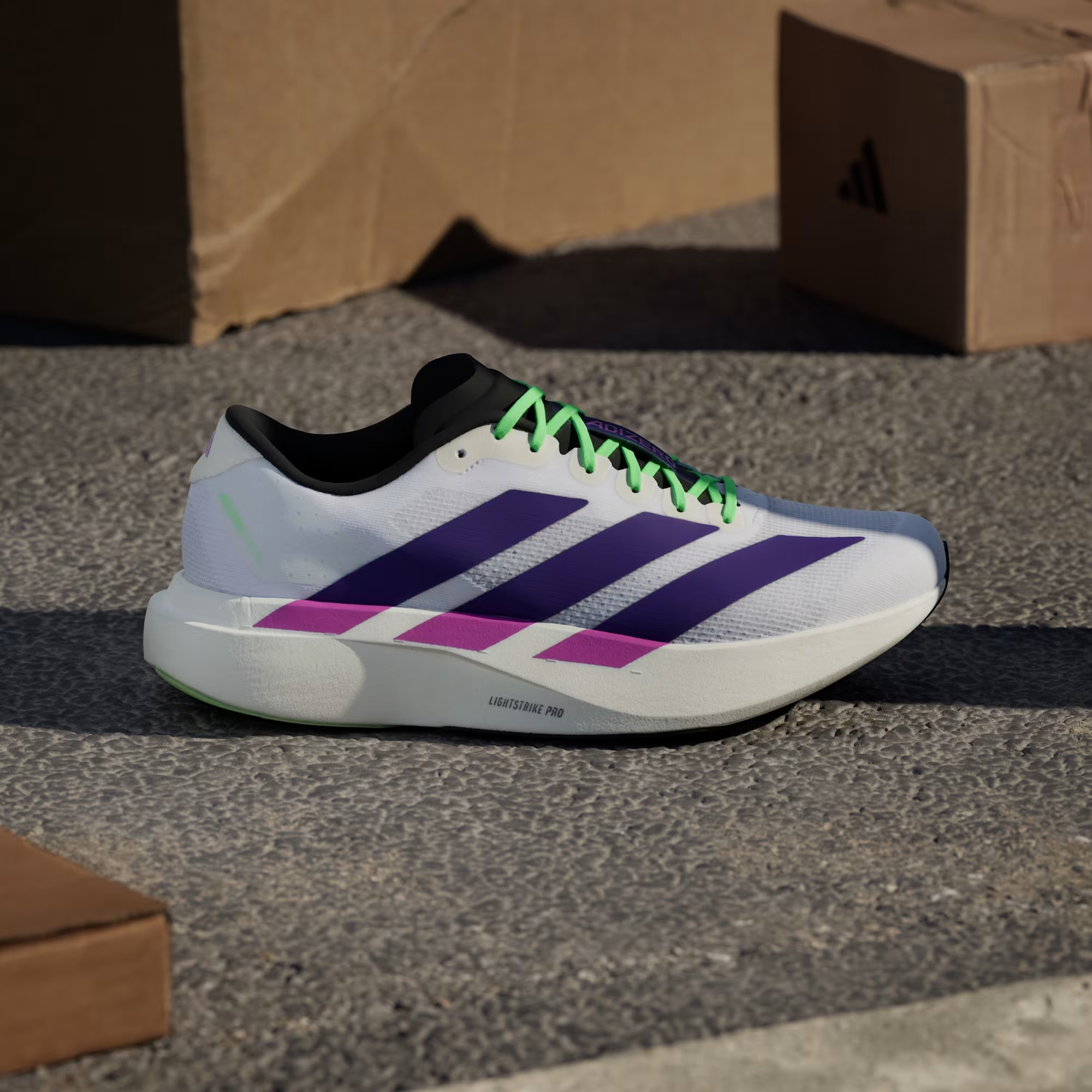
Adidas Adizero Evo SL — Best Overall
Price: £130 | Weight: 224g (UK 8.5) | Drop: 7mm | Type: Neutral
The Adidas Adizero Evo SL is, quite simply, the most impressive all-round running shoe we tested this year. It borrows the full-length Lightstrike Pro midsole — the same superfoam found in the £450 Adizero Evo Pro — and delivers it at a fraction of the cost. That’s not a marketing gimmick; you genuinely feel it from the first stride.
Who Is It For?
This shoe suits just about everyone. Beginners wanting a single do-it-all trainer, experienced runners seeking a versatile shoe for daily mileage and tempo sessions, and anyone who dislikes the rigid feel of carbon plates but still craves performance. It handles short 5K efforts and long weekend runs with equal aplomb.
Comfort & Fit
The Evo SL runs true to size in UK sizing. The upper is ultra-breathable — almost too much so for a bitter British January — and the heel counter provides a secure, well-padded lockdown. That said, the tongue is short and tends to shift during longer runs, which is our main gripe with the shoe.
Performance
In our lab and road testing, the Evo SL recorded an outstanding 74.3% energy return, putting it in the same league as shoes costing twice as much. The nylon dog bone insert running through the midfoot keeps transitions smooth and forward-rolling without the stiffness of a plated shoe. We tested it on wet London pavements, dry parkrun courses, and even a few light trail sections — it handled everything confidently.
Pros:
- Exceptional value-to-performance ratio
- Incredibly lightweight at 224g
- Full Lightstrike Pro superfoam at just £130
- Versatile from easy runs to tempo sessions
Cons:
- Short, non-gusseted tongue slides during long runs
- Toebox durability is questionable over 500+ km
- Not suitable for runners needing stability support
UK Sizing: True to size. For detailed conversion, see our complete UK to EU shoe size guide.
Check the Adidas Adizero Evo SL price on Amazon UK | Available at SportsShoes.com
Asics Novablast 5 — Best for Long Runs
Price: £135 | Weight: 255g (UK 9) | Drop: 8mm | Type: Neutral
The Asics Novablast 5 is the plushest version Asics has ever made in this line, and it shows. The new FF Blast MAX foam delivers an 8.5% increase in energy return over the Novablast 4, and during our testing across 200+ km of road running, the difference was unmistakable — particularly on runs beyond 15 km.
Who Is It For?
Long-distance runners who prioritise comfort above all else. It’s also an outstanding first “proper” running shoe for beginners who want one pair to handle everything from slow shakeout jogs to occasional tempo efforts.
Comfort & Fit
The Novablast 5 runs true to size and is the best version yet for wider feet — a welcome change from earlier models that felt cramped. The midsole is noticeably softer than the Novablast 4, which some runners preferred for its firmer feel. If you liked the bouncier character of the Novablast 3, this version brings that spirit back.
Performance
Shock absorption tested exceptionally high at 141 SA in the heel, well above the average of 130 SA. The shoe required only 11.2N of force to flex in our bend test, making it one of the most flexible high-stack trainers we’ve tested. However, grip remains a weak point — perfectly adequate on dry surfaces but not confidence-inspiring on wet British pavements. For UK autumn and winter running, bear this in mind.
Pros:
- Plushest, most cushioned Novablast yet
- Lighter than its predecessor despite higher stack
- Excellent for wide feet
- Great value at £135
Cons:
- Grip falls short in wet conditions
- Breathability could be improved
- Toebox durability is a concern long-term
UK Sizing: True to size. UK 9 (EU 43).
Check the Asics Novablast 5 price on Amazon UK | Available at SportsShoes.com
Nike Pegasus Premium — Most Cushioned
Price: £190 | Weight: 309g (UK 9) | Drop: 10mm | Type: Neutral
The Nike Pegasus Premium is Nike’s most ambitious daily trainer, packing a triple-stack midsole of ZoomX foam, a sculpted Air Zoom unit, and ReactX foam. The result is an absurdly bouncy ride — one tester nicknamed his pair “Tiggers” because of the spring in every step.
Who Is It For?
Runners who want maximum cushioning and don’t mind a heavier shoe. If you’re training for a marathon and your legs crave softness during easy miles, the Pegasus Premium delivers. It’s not for speedwork, though — at 309g, it feels bottom-heavy when you pick up the pace.
Comfort & Fit
The fit runs true to size but is notably narrow through the midfoot. Runners with wider feet should try before they buy, ideally at a store like JD Sports or Schuh. The padded tongue and collar provide a snug, premium feel that lives up to the name.
Performance
The triple-stack technology delivers an incredibly bouncy forefoot, and the ReactX foam is 13% more responsive than previous Nike foam compounds. However, the shoe scored 21.2N in our stiffness test — stiffer than many plated shoes — which means it’s not as flexible as you might expect for a daily trainer. The modified waffle outsole offers solid traction, even in wet conditions, which is a genuine advantage over several competitors here.
Pros:
- Unmatched bounce and cushioning
- Excellent wet-weather traction
- Premium build quality throughout
Cons:
- Heaviest shoe on this list at 309g
- Narrow midfoot won’t suit all feet
- Expensive at £190 RRP
UK Sizing: True to size, but try in-store if you have wide feet. UK 9 (EU 43).
Check the Nike Pegasus Premium price on Amazon UK | Available at Nike.com/gb
Puma Velocity Nitro 4 — Best Value
Price: £110 | Weight: 247g (UK 9) | Drop: 10mm | Type: Neutral
At £110, the Puma Velocity Nitro 4 is the most affordable shoe on this list — and it punches well above its price tag. Puma ditched the dual-foam setup of version 3 for a single slab of nitrogen-infused Nitrofoam, shaving nearly 15g off the weight while improving energy return.
Who Is It For?
This is the shoe we’d recommend to anyone just getting into running, or experienced runners who need a reliable daily trainer without spending a fortune. It’s versatile enough for easy runs, long runs, recovery sessions, and even moderate tempo efforts.
Comfort & Fit
The engineered mesh upper is lighter and more breathable than version 3. Like most Puma models, the fit is snug — we’d recommend trying them on in-store or ordering your usual UK size. The padded, perforated tongue is comfortable, and the rolled heel collar prevents any Achilles irritation.
Performance
The full Nitrofoam midsole provides very good forefoot energy return, making the shoe feel lively when you lean into your stride. It’s grounded and traditional rather than modern and rockered, which some runners will love and others might find uninspiring. The PumaGrip outsole is genuinely excellent — one of the best we’ve tested for wet-road grip, which makes this a fantastic option for year-round UK running.
Pros:
- Outstanding value at £110
- Lighter and bouncier than version 3
- Excellent PumaGrip outsole for wet conditions
- Versatile for all training types
Cons:
- Lacks the modern, rockered ride of premium competitors
- Snug fit may not suit wider feet
- Cushioning is modest compared to higher-stack shoes
UK Sizing: True to size but snug. Consider trying in-store. UK 9 (EU 42.5).
Check the Puma Velocity Nitro 4 price on Amazon UK | Available at SportsShoes.com
New Balance FuelCell Rebel v5 — Best Lightweight Trainer
Price: £140 | Weight: 224g (UK 9) | Drop: 6mm | Type: Neutral
The New Balance FuelCell Rebel v5 is featherlight at just 224g, making it one of the lightest daily trainers on the market. The FuelCell midsole — a PEBA/EVA blend — offers a soft landing with a springy rebound that feels lively without being harsh.
Who Is It For?
Runners who value low weight and a natural, agile ride. The Rebel v5 shines on tempo runs, intervals, strides, and even race day for distances up to half marathon. It also works well as a second shoe in rotation for speed-focused sessions.
Comfort & Fit
Fit is true to size with a noticeably generous toebox — great news for wider feet. Heel lockdown is excellent and secure with no slippage. However, the forefoot lockdown feels slightly loose at faster paces, which could be an issue for aggressive speedwork. The gusseted tongue and padded collar add comfort throughout.
Performance
The ride is lively and versatile. On our test runs through Richmond Park and along the Thames Path, the Rebel v5 felt most at home at moderate-to-fast paces. The FuelCell foam is slightly firmer than version 4, adding a touch more stability without sacrificing the springy character. The outsole uses strategically placed rubber with some exposed foam in the midfoot, offering adequate but not exceptional durability.
Pros:
- Ultra-lightweight at 224g
- Generous, wide-foot-friendly toebox
- Lively, springy ride across varied paces
- Clean, modern aesthetic
Cons:
- Forefoot lockdown loosens at higher speeds
- Less cushioning than maximalist options
- Exposed midsole foam reduces long-term durability
UK Sizing: True to size. Generous fit for wider feet. UK 9 (EU 43).
Check the New Balance Rebel v5 price on Amazon UK | Available at SportsShoes.com
Hoka Arahi 8 — Best for Overpronators
Price: £140 | Weight: 270g (UK 9) | Drop: 8mm | Type: Stability
The Hoka Arahi 8 is the only stability shoe on this list, and it’s here for good reason. If you overpronate — meaning your foot rolls inward excessively during your stride — this shoe provides reliable support without feeling heavy or overly corrective. For a deeper comparison, check our full Hoka vs Asics breakdown.
Who Is It For?
Runners who need mild-to-moderate stability support. The Arahi 8 also works brilliantly as a walking shoe or for runners who spend long days on their feet. It’s lighter than most stability shoes at 270g, which is impressive given the amount of support technology packed inside.
Comfort & Fit
Hoka has widened the fit in the Arahi 8 compared to previous versions, and the higher-volume upper accommodates a broader range of foot shapes. The shoe runs true to size, though if you’re coming from brands like Brooks or Saucony, Hoka recommends going up half a UK size for an equivalent fit. The double jacquard mesh upper is comfortable, and the CMEVA midsole provides a soft, cushioned ride.
Performance
The new H-Frame stability system replaces the J-Frame of earlier models, using firmer foam on the medial side to contain lateral forces. In practice, this feels less “corrective” and more naturally stable — even neutral-gait runners benefit from the centred platform. Torsional rigidity scored a perfect 5/5 in our testing, meaning the shoe resists unwanted twisting effectively. However, grip scored below average at 0.36 on wet surfaces — not ideal for rainy British mornings.
Pros:
- Lightweight for a stability shoe
- Wider, more accommodating fit than previous versions
- Smooth forefoot transition
- Strong shock absorption
Cons:
- Grip is poor on wet surfaces
- Medial heel feels slightly clunky
- Less stability than earlier Arahi versions
UK Sizing: True to size. Go up half a UK size if switching from Brooks or Saucony. UK 9 (EU 43).
Check the Hoka Arahi 8 price on Amazon UK | Available at SportsShoes.com
Saucony Endorphin Speed 5 — Best for Speed Training
Price: £180 | Weight: 237g (UK 9) | Drop: 8mm | Type: Neutral (nylon-plated)
The Saucony Endorphin Speed 5 has long been the gold standard for nylon-plated training shoes, and version 5 refines the formula without reinventing it. The full-length PWRRUN PB midsole paired with a redesigned nylon plate delivers snappy, propulsive transitions that make tempo runs feel effortless.
Who Is It For?
Runners who take their speedwork seriously. Whether it’s Tuesday night track intervals, Saturday morning parkrun PBs, or marathon-pace long runs, the Endorphin Speed 5 handles it all with aplomb. It’s also a genuine race-day option for 5K through to half-marathon distances.
Comfort & Fit
Fit is true to size with a wider forefoot than version 4 — a welcome change for those who found earlier models pinching around the toes. The engineered hexagon mesh upper is thin but secure, creating a performance fit that doesn’t sacrifice comfort. The heel has been slightly widened too, adding inherent stability on longer runs.
Performance
In our testing, the Endorphin Speed 5 recorded a traction score of 0.52, outperforming even the pricier Endorphin Elite 2. The ride feels softer and bouncier than version 4, with the reworked nylon plate providing spring without the aggressive stiffness of carbon. SPEEDROLL geometry ensures smooth heel-to-toe transitions. At 237g, it sits in a sweet spot — light enough for racing, cushioned enough for training.
Pros:
- Excellent traction, even in wet conditions
- Nylon plate provides spring without harsh stiffness
- Wider forefoot than previous version
- Versatile for training and racing
Cons:
- At £180, it’s one of the pricier options here
- Slightly heavier than version 4
- Not as explosive as full carbon-plated racers
UK Sizing: True to size. UK 9 (EU 43).
Check the Saucony Endorphin Speed 5 price on Amazon UK | Available at SportsShoes.com
Nike Zoom Fly 6 — Best Carbon-Plated Trainer
Price: £155 | Weight: 266g (UK 9) | Drop: 8mm | Type: Neutral (carbon-plated)
The Nike Zoom Fly 6 is the comeback story of 2026. After the disappointing Zoom Fly 5, Nike stripped it back and rebuilt with proper ZoomX foam, a carbon fibre Flyplate, and an SR-02 foam base layer. The result is a genuine super trainer that doubles as a race-day shoe for many runners.
Who Is It For?
Runners wanting a taste of carbon-plated performance without committing to a dedicated racing shoe. It’s ideal for tempo runs, long marathon-pace efforts, and even race day for those who don’t want to shell out £250+ for the Vaporfly or Alphafly. At £155, it represents terrific value in the super trainer category.
Comfort & Fit
The fit is snug and performance-oriented — true to size in length but low in volume. Runners with wider feet may find the toebox restrictive, and we’d recommend trying these on in-store before committing. The woven mesh upper is thin but comfortable, with a semi-gusseted tongue that enhances lockdown.
Performance
On our test runs — including a 20-mile marathon-pace session and several 10K tempo efforts — the Zoom Fly 6 felt peppy and consistent. The carbon plate promotes a quick toe-off without the extreme stiffness of true super shoes, scoring 21.5N in our flex test. The dual-layer midsole (ZoomX on top, SR-02 on the bottom) provides cushioning with decent durability, though it’s not as explosively bouncy as pure ZoomX shoes. Outsole durability is outstanding — we saw minimal wear after 300+ km.
Pros:
- Excellent value for a carbon-plated super trainer
- Versatile from daily runs to race day
- Outstanding outsole durability
- Peppy, consistent ride
Cons:
- Narrow toebox restricts wider feet
- SR-02 foam lacks the bounce of pure ZoomX
- Stability could be better at slower paces
UK Sizing: True to size but snug. Consider half a size up for wide feet. UK 9 (EU 43).
Check the Nike Zoom Fly 6 price on Amazon UK | Available at Nike.com/gb
Best Running Shoes for Women in the UK
All eight shoes above are available in both men’s and women’s versions, with women’s models featuring adjusted lasts, lighter weights, and often different colourways. Here are the standout picks specifically for women’s running trainers:
- Best overall for women: Adidas Adizero Evo SL — exceptionally light in the women’s version and available in wide
- Best cushioned for women: Asics Novablast 5 — the improved wide-foot fit is especially welcome in the women’s model
- Best stability for women: Hoka Arahi 8 — available in standard and wide widths for both men and women
- Best for speed: Saucony Endorphin Speed 5 women’s weighs just 204g, making it one of the lightest plated trainers you can buy
How We Test
Every shoe in this guide was tested on real feet, in real UK conditions. We don’t regurgitate press releases or rely on first impressions — our testing process is thorough and consistent.
Testing protocol:
- Each shoe was worn for a minimum of 80 km before any review was written
- Testing surfaces included London pavements, parkrun courses, canal towpaths, and treadmills
- We tested in typical British weather conditions — rain, cold mornings, mild autumn days, and everything in between
- Lab measurements were taken for weight, stack height, flexibility, and energy return
- At least two testers wore each shoe across different foot shapes and running styles
We believe that real-world experience — not spec sheets — determines whether a running shoe deserves your money. When we say a shoe performs well on wet pavements, it’s because we’ve actually run through puddles in Battersea Park to find out.
How to Choose Running Shoes — A Buyer’s Guide
Cushioning
Cushioning is the foam between your foot and the ground. Softer foams (like ZoomX and Lightstrike Pro) absorb more impact and feel plush, while firmer foams provide a snappier, more responsive feel. For long-distance running, prioritise cushioning. For speedwork, responsiveness matters more.
Stability vs. Neutral
Neutral shoes suit most runners — they don’t correct your gait in any direction. Stability shoes like the Hoka Arahi 8 include firmer foam or structural elements on the medial (inner) side to prevent excessive inward rolling (overpronation). If you’re unsure, visit a specialist running shop for a gait analysis.
Drop
Drop (also called heel-to-toe offset) is the height difference between the heel and forefoot of the midsole — measured in millimetres. A higher drop (10-12mm) suits heel strikers, while a lower drop (4-6mm) encourages a midfoot or forefoot strike. Most versatile trainers sit between 6-10mm. The drop that’s right for you depends on your natural running form.
Weight
Lighter shoes generally feel faster and more agile, but may sacrifice cushioning and durability. For daily training, anything under 280g is excellent. For racing and speed sessions, aim for under 240g.
UK vs. EU Sizing
UK and EU shoe sizes don’t convert neatly, and brands vary. Always check brand-specific size charts and note that a UK 9 is typically EU 43 but can range from EU 42.5 to EU 44 depending on the brand. For the full breakdown, see our UK to EU shoe size guide.
Frequently Asked Questions
What are the best running shoes for beginners in the UK?
For beginners, we recommend the Puma Velocity Nitro 4 (£110) for its unbeatable value and versatility, or the Adidas Adizero Evo SL (£130) if you want premium foam technology without paying premium prices. Both are comfortable, lightweight, and handle all types of runs — from slow jogs to your first parkrun.
How often should you replace running shoes?
Most running shoes last between 500 and 800 km, depending on the shoe, your weight, running surface, and gait. Signs of wear include reduced cushioning (your joints feel more impact), visible midsole creasing, and outsole tread wearing smooth. If your knees or shins start aching in a shoe that previously felt fine, it’s time for a new pair.
Are Hoka shoes worth it?
Hoka shoes are worth it if you value maximum cushioning and a smooth, guided ride. The Hoka Arahi 8 is particularly good value at £140 for runners who need stability support. However, Hoka’s grip tends to underperform on wet surfaces compared to brands like Puma and Saucony, which is worth considering for year-round UK running. For a detailed breakdown, read our Hoka vs Asics comparison.
What’s the difference between neutral and stability running shoes?
Neutral shoes (like most on this list) allow your foot to move naturally without correction. Stability shoes (like the Hoka Arahi 8) include structural features — typically firmer foam on the inner side — that prevent your foot from rolling too far inward during each stride. If you experience knee or ankle pain, a gait analysis at a specialist running shop can determine which type you need.
Are carbon-plated shoes worth the extra money?
Carbon-plated shoes like the Nike Zoom Fly 6 and Saucony Endorphin Speed 5 (nylon plate) add propulsion and energy return, making them worthwhile for runners doing regular tempo sessions, racing, or marathon training. For purely easy running, a non-plated shoe like the Adidas Adizero Evo SL offers similar performance at a lower price and with a more natural ride feel.
Our Final Recommendation
If we could only recommend one running shoe from this list, it would be the Adidas Adizero Evo SL. At £130, it delivers race-level foam technology in a versatile, lightweight package that suits beginners and experienced runners alike. For those needing stability, the Hoka Arahi 8 is our top pick. And if speed is your priority, the Saucony Endorphin Speed 5 remains the best nylon-plated trainer you can buy.
👉 Want shoe deals straight to your inbox? Sign up for the TheShoeByte newsletter and never miss a price drop on the UK’s best running shoes.
Last Updated: 8 February 2026


Leave a Reply